
Group class guide: get to know all 20 formats at Dragos’ in one article
What are group classes? All 20 formats at Dragos, one by one: Pilates, yoga, HIIT, cycling and mobility. An intensity table, how to choose by goal and a sample week.
The short answer to what group classes are is simple: planned workouts done together under a trainer’s guidance within a set time and flow. The long answer is where most people get confused: the schedule has dozens of names such as Bench Burn, Yin Yoga, Barre Pilates, Chair Vibes and Budokon, and it is impossible to tell from the name what each one is or which one suits you. In this guide we explain one by one the 20 group class formats we run at O’Wellness Dragos: what each format is, which muscles it works, its intensity level, who it suits and how it should fit into your weekly schedule. If you are trying to build a new routine in Maltepe, in Dragos or anywhere else on the Anatolian side, the matching table you are looking for is here.
What is a group class, and how does it differ from one-to-one training?
A group class is a form of training in which a pre-planned flow is led live by an instructor and which usually lasts between 45 and 60 minutes. The music, tempo, movement order and rest intervals are set by the instructor; the participant simply follows. This structure provides three important advantages:
- It removes decision fatigue. You never have to wrestle with “what should I train today, how many sets should I do”. That is the obstacle beginners get stuck on most often.
- It builds consistency. A class at a fixed time becomes an appointment in your calendar. With unstructured training, the drop-off rate is always higher.
- It sets the pace from the outside. Working in a group, you naturally hold an intensity you could never sustain on your own. This effect is especially pronounced in cardiovascular development.
What you give in return is flexibility and personalization: the class is not built around your injury. For this reason, the most important rule of group class culture is to tell the instructor about your situation at the start of class. We have a low-impact variation of every format, and the instructor will show it to you specifically. If you have a specific goal (return after injury, postpartum recovery, a performance target), combining group classes with one-to-one work is the most effective route; for the options special services you can find on the page.

The easiest way to understand the formats: four families
Instead of memorizing twenty names one by one, dividing the formats into four families makes things much easier. When you look at the schedule, checking how many classes you take from each family is the most practical way to build a balanced week.
- The control and core family: Mat Pilates, Barre Pilates, Core Power, Booty Class, Chair Vibes. Slow pace, high muscular endurance, focus on the core and glutes.
- The yoga family: Vinyasa Flow, Power Yoga, Hatha Yoga, Yin Yoga, Yoga Fit, Budokon Yoga, Power Vinyasa, Weekend Yoga Flow. Breath, flexibility, balance and mental recovery.
- The intensity family: Bench Burn, HIIT Boxing, Cycling, Total Body, Summer Body. High heart rate, cardiovascular capacity, calorie burn.
- The recovery and mobility family: Stretching, Mobility. Range of motion, joint health, post-workout recovery.
A balanced week includes at least three of these four families. In members who take classes only from the intensity family, stiffness and a performance plateau appear within six to eight weeks; in those who take classes only from the yoga family, strength development stays slow. Group classes we suggest you read our timetable through the logic of these four families.
The control and core family: Mat Pilates, Barre Pilates, Core Power, Booty Class, Chair Vibes
Mat Pilates
The classic Pilates format, performed without machines using only body weight and small props (Pilates ball, ring, mini band). It targets the deep abdominal muscles, the pelvic floor and the stabilizers around the spine. The tempo is slow, but the demand on muscular endurance is high. This class, which we run at O’Studio, is one of the safest entry points for beginners: every movement has a modified version, and the risk of injury is very low. For desk-based workers, it helps with managing stiffness in the lower back and neck. It is scheduled once or twice a week, preferably between strength days.
Barre Pilates
A format performed while holding onto a ballet barre, working with very small ranges of motion and high repetition counts. The hips, inner thigh, hip muscles and trunk are targeted. No weights are used, yet the burning sensation is quite intense because the muscle is kept under continuous isometric tension. It is effective on posture and muscle tone; the load on the joints is minimal, so people with knee and lower back sensitivity can do it comfortably under instructor supervision. Beginners may feel a noticeable trembling in their legs as they leave the first class, and this is normal.
Core Power
As the name suggests, an intense 30-45 minute format focused entirely on the center of the trunk. It includes plank variations, dead bugs, hollow holds, rotational movements and anti-rotation work. The aim is not to work the abdominal muscles “aesthetically” but to strengthen the pressure system that protects the spine. A strong trunk directly raises your performance in every other format, from cycling to HIIT. Once a week is enough and it can be added to the same day as strength classes.
Booty Class
A format focused on the hip muscles and the posterior leg chain. Bridge variations, hip thrusts, kickbacks, mini band work and single-leg movements predominate. In people who work seated for long periods, the hip muscles generally lose their function and the load shifts to the lower back; the most concrete contribution of this format is helping to restore that balance. Although it is popular for aesthetic goals, functionally it is also valuable for lower back health and running economy.
Chair Vibes
A low-impact but surprisingly demanding format in which the chair is used as a piece of equipment. The chair functions both as support and as a point of resistance; movements performed seated and standing target the hips, legs and trunk. Because joint load is very low, it is an ideal entry point for older age groups, for those who do not want to take high-impact classes because of excess weight, and for those returning after injury. At the same time, it teaches office workers movement patterns they can apply during the day.
The yoga family: eight different formats, eight different purposes
“Yoga” is not one single thing; the eight yoga formats on the schedule differ substantially from one another in intensity, tempo and purpose. We run all of these formats weekly in the O’Soul studio.
Hatha Yoga
The classic, slow format in which postures are held for a long time and alignment with the breath is taught. There is no flow; each pose is entered, held and exited. For those starting yoga for the first time this is the most appropriate starting point, because it allows time to learn the movements. Flexibility, balance and breath control develop.
Vinyasa Flow
A flowing sequence synchronized with the breath. Poses are linked to one another and the class progresses like a choreography. It is more active than hatha and gentler than power yoga. It also has a cardiovascular load; know from the start that you will sweat in class. It is recommended that you join after knowing the movements at a basic level, that is, generally from the third week on.
Power Yoga
A strength-focused, fast-paced and demanding format. Chaturanga transitions, long-held warrior sequences and arm balances predominate. The upper body and the core work seriously. It is suitable for those with yoga experience or a background in strength training; it is not a class to join in your first week.
Power Vinyasa
The most demanding yoga format on the schedule, combining the strength demand of power yoga with the flow of vinyasa. The tempo is high, rest is minimal, the sequences are long. It demands strength, endurance and flexibility in the same class. For experienced members it functions as the week's “yoga cardio”.
Yin Yoga
The exact opposite end of the spectrum. Poses are held passively for 2-5 minutes, and the targets are not the muscles but the connective tissue and joint capsules. Muscular effort is not used; gravity and time do the work. For members who train intensely it is one of the most effective recovery tools, and it is also the format we receive the most feedback on in terms of stress management. One yin class a week noticeably increases the sustainability of a HIIT- and cycling-heavy program.
Yoga Fit
A hybrid format in which yoga poses are combined with fitness logic. Functional patterns such as squats, lunges and planks are placed within the yoga flow; sometimes light weights are also used. It is designed for members who want yoga’s flexibility and breath side but “do not find” a classic yoga class “demanding enough”. A practical solution for those who want strength and flexibility in a single class.
Budokon Yoga
A modern discipline combining yoga, martial arts and animal movement patterns. It requires flowing transitions on the floor, rotations and trunk control in continuous motion. Its effect on coordination, mobility and spatial awareness is high. It is the class most loved by those who find classical yoga formats monotonous; the learning curve is a little steeper and it requires patience.
Weekend Yoga Flow
A weekend-only flow class that is longer and calmer in tempo. It is built around letting go of the week's fatigue, devoting more time to breathing work and experiencing the class without rushing. Because we are open 09:00-21:00 at weekends, this format attracts strong interest in the morning hours; it is a favorite of our members who come at weekends from Kadıköy, Ataşehir and Pendik.
The intensity family: Bench Burn, HIIT Boxing, Cycling, Total Body, Summer Body
Bench Burn
A high-intensity interval class centered on the step bench, in the O’Hiit studio. Jumping, climbing, pushing and stepping movements performed on and around the bench are combined with short rests. Heart rate stays high throughout the class, and calorie expenditure is among the highest formats on the schedule. The lower body and the core work predominantly. For those with knee sensitivity, the instructor always provides a jump-free variation.
HIIT Boxing
A format in which boxing-based movements (jab, cross, hook, uppercut, evasion) are combined with a high-intensity interval structure. It is non-contact, meaning there is no sparring; the goal is technique and conditioning. The upper body, trunk rotation and coordination work intensively. In terms of releasing stress, it is one of the classes we receive the most positive feedback about from members. Because it requires coordination, not getting the movements quite right in the first two or three classes is completely normal.
Cycling
An indoor cycling class on stationary bikes set to music, in the O’Ride studio. It is the most controlled cardiovascular option for beginners, because you set the resistance entirely yourself: in the same class one member can work at maximum effort while the member beside them works at an easy pace. Since joint load is low, it is an ideal alternative for those who need to avoid running. Endurance, leg muscular endurance and cardiorespiratory capacity all improve.
Total Body
A general format covering the whole body in a single class and combining strength and conditioning. Dumbbell, kettlebell, band and bodyweight movements are performed as a circuit. All the fundamental movement patterns such as squat, push, pull, hinge and carry are included. It is the most efficient single-class option for members who can only come two days a week, because it leaves no area out.
Summer Body
A conditioning class that combines strength and cardiovascular work with high repetition counts and progresses in a circuit structure. Blocks targeting the hips, legs, abdomen and arms follow one another and rest intervals are kept short. Muscular endurance and calorie expenditure are in the foreground. It is an effective option for varying the program during seasonal periods of focus; however, it is not a program on its own and should be thought of as part of a balanced week.
The recovery family: Stretching and Mobility
Stretching
A class made up of static and dynamic stretching work focused on lengthening the muscles. The goal is to help the muscles regain their resting length and to reduce post-training stiffness. It is one of the formats members who train intensely skip most often, yet one that makes the most difference in the long term. It is scheduled once a week, ideally the day after the most intense training day.
Mobility
It gets confused with stretching, but it is different: mobility develops the capacity to actively control a joint's own range of motion. Controlled, active work is done on the hips, shoulders, ankles and thoracic spine. For people who spend long hours at a desk, it may be the most valuable class on the schedule; its effect on squat depth, overhead movements and posture shows quickly. We recommend it to beginners from the very first week.
A comparison table of all the formats
The table below compares all 20 formats on a single screen in terms of intensity, focus and suitability.
| Format | Family | Intensity | Main focus | Beginner |
|---|---|---|---|---|
| Mat Pilates | Control | Moderate | Core, posture | Very suitable |
| Barre Pilates | Control | Moderate | Hips, legs, tone | Suitable |
| Core Power | Control | Moderate-high | Trunk stability | Suitable |
| Booty Class | Control | Moderate | Hips, posterior chain | Suitable |
| Chair Vibes | Control | Low-moderate | Low-impact strength | Very suitable |
| Hatha Yoga | Yoga | Low | Flexibility, breathing | Very suitable |
| Vinyasa Flow | Yoga | Moderate | Flow, endurance | Suitable |
| Power Yoga | Yoga | High | Strength, upper body | Requires experience |
| Power Vinyasa | Yoga | Very high | Strength and flow | Requires experience |
| Yin Yoga | Yoga | Very low | Connective tissue, recovery | Very suitable |
| Yoga Fit | Yoga | Moderate-high | Hybrid strength | Suitable |
| Budokon Yoga | Yoga | Moderate-high | Coordination, mobility | Moderate |
| Weekend Yoga Flow | Yoga | Low-moderate | Calm flow | Very suitable |
| Bench Burn | Intensity | Very high | Cardio, lower body | With a variation |
| HIIT Boxing | Intensity | Very high | Conditioning, upper body | With a variation |
| Cycling | Intensity | Adjustable | Endurance | Very suitable |
| Total Body | Intensity | High | General strength | Suitable |
| Summer Body | Intensity | High | Muscular endurance | Moderate |
| Stretching | Recovery | Low | Flexibility | Very suitable |
| Mobility | Recovery | Low | Joint mobility | Very suitable |
Choosing a format for your goal
The most practical way not to get lost in the timetable is to clarify your goal and settle on three or four formats that serve it. Here are the combinations we suggest for the goals we hear most often:
- Weight management and conditioning: Two high-intensity classes a week (Bench Burn or HIIT Boxing with Cycling), one Total Body and one Stretching. Planned together with nutritional support, this is the structure that gives the most consistent results.
- Poor posture and desk-job stiffness: One Mobility class, one Mat Pilates and one Hatha or Yin Yoga a week. This trio helps you regain range of motion. Adding reformer speeds the process up noticeably.
- Muscle tone and shaping: The trio of Barre Pilates, Booty Class and Core Power, plus Total Body once a week.
- Flexibility and stress management: Vinyasa Flow, Yin Yoga and Weekend Yoga Flow. Budokon Yoga is a good addition for anyone who gets bored of routine.
- Gradual return after injury: Starting with Chair Vibes and Mobility, then moving to Mat Pilates and reformer work with an assessment by the sports physiotherapist on our team and physician approval. In this process it is critical not to rush toward intensity.
- Performance and advanced level: A combination of Power Vinyasa, Total Body and Bench Burn plus one compulsory Yin or Stretching class a week. At an advanced level, recovery deserves as much planning as the training itself.
How do group classes and the reformer come together?
Group classes and equipment-based work aren't alternatives to each other; they're complementary. Reformer Pilates, thanks to the spring system of the Balanced Body Allegro 2 machines, lets you perform the same movement both with assistance and with added difficulty. This means you can learn a movement pattern you struggle with in group classes by isolating it on the reformer.
The three combinations that work best in practice:
- Reformer plus Cycling: Core control and cardiovascular capacity. The most balanced pairing for beginners.
- Reformer plus Total Body: Movement quality and overall strength. Efficient for those with strength goals.
- Reformer plus Yin Yoga: Control and recovery. The combination most preferred by our members with demanding work schedules.
When planning your weekly split, the current class times weekly schedule page, and see who teaches each format and their areas of expertise our trainers you can review on the page. Since each of the 17 trainers on staff specializes in certain formats, it is normal to have different experiences with different trainers under the same class name; this is not an inconsistency but the richness of the staff.
A sample weekly group class schedule
The table below is an example of a balanced week for an intermediate member who can come four or five days a week. All four families are represented.
| Day | Format | Family | Goal |
|---|---|---|---|
| Monday | Total Body | Intensity | Starting the week with strength |
| Tuesday | Mat Pilates or Core Power | Control | Trunk and posture |
| Wednesday | Cycling | Intensity | Cardiovascular capacity |
| Thursday | Mobility | Recovery | Joint mobility |
| Friday | Bench Burn or HIIT Boxing | Intensity | Intense intervals |
| Saturday | Weekend Yoga Flow | Yoga | Flexibility and breathing |
| Sunday | Yin Yoga or rest | Recovery | Passive recovery |
The logic of this program is this: a control or recovery day is always placed between the intensity classes. Taking high-intensity classes three days in a row does not speed up progress; on the contrary, it slows it by hindering recovery.
What to know before your first group class
- Arrive early. Being in the studio five or ten minutes early gives you enough time to set up the equipment and have a short conversation with the trainer. In cycling classes, saddle and handlebar setup directly affects performance.
- Introduce yourself. Saying “this is my first class” prompts your trainer to give you extra attention throughout the session.
- Do not pick the back row. Beginners instinctively choose the back row, but standing somewhere the trainer can see you corrects your movement quality far more quickly.
- Stay at your own pace. Trying to keep up with the person next to you is the most common mistake made in a first class. Doing the movement correctly always comes before pace.
- The right shoes and socks. Grip socks for Pilates, yoga and barre classes; sturdy-soled trainers for cycling, HIIT and Bench Burn.
- Water and a towel. In the higher-intensity classes in particular, both are considered essential.
- Do not decide after a single try. In formats that demand coordination (HIIT Boxing, Budokon), the first class is misleading. Give it up to three classes.
The heated indoor pool, sauna and steam room inside the facility are available to you for post-class recovery. If you are looking for deeper manual recovery support, massage and spa services are offered through our separate brand O’Spa Dragos is offered within it.
The practical advantages of taking a group class in Dragos
Having five separate studios together in a facility of over 2,000 square meters means that formats are practiced in their own environment without mixing with one another: the yoga class in O’Soul, whose lighting and sound are designed for it, cycling in O’Ride, high-intensity formats in O’Hiit, Pilates and barre in O’Studio, and equipment work in the reformer studio. This separation eliminates the loss of comfort created by classes overlapping in the same hall.
On the location side, we are at Cevizli Mah. Tugay Yolu Cd. No:10: walking distance to the Cevizli Marmaray station, one minute from the E-5 Tugay Yolu exit, and free parking. Thanks to this trio, our members coming from Kartal, Pendik, Kadıköy and Ataşehir as well as from outside Maltepe can make it to class even in evening traffic. We are open 06:00-23:00 on weekdays and 09:00-21:00 on weekends; in other words, finding the same format both early in the morning and late in the evening is possible on most days.
For more information about the facility's approach and the team about us page, and for the guides we publish regularly on formats and training planning blog section. The O’Wellness umbrella brand also includes the Sky branch in Sarıyer and branches in Ankara Beytepe and Bodrum Yalıkavak.
The most common mistakes in group classes
Knowing the formats matters, but so does not using them wrongly. The six mistakes we see most often over the years, and how to fix them:
- Only taking classes from the family you like. In those who enjoy intensity classes and skip yoga and mobility, stiffness and a performance plateau appear within a few months. The reverse is also true: in those who only do yoga, strength development stays slow. Touch at least three families a week.
- Doing every class at maximum effort. If every session in a week is maximal, none of them is. One or two classes a week should be high intensity and the rest moderate.
- Chasing the tempo without understanding the movement. Especially in Bench Burn, HIIT Boks and Power Vinyasa, form that breaks down for the sake of speed produces more risk than gain. If the trainer tells you to slow down, that is a sign of correct progress, not of going backwards.
- Skipping the warm-up and cool-down. Slipping into class at the last minute and missing the first five minutes means skipping the most protective part of it. The cool-down at the end matters just as much.
- Judging a format from a single class. In formats that demand coordination, the first class almost always goes badly. For Budokon Yoga and HIIT Boxing, do not make up your mind before at least three classes.
- Skipping the reservation. The 18:00-21:00 evening window and weekend mornings are the busiest slots. The easiest way to build a fixed routine is to book the week's classes all at once on Sunday evening.
The progress of a member who corrects these six items is often faster than that of a member who increases their number of classes. In group classes, the real gain comes from repeating the right format at the right frequency and the right intensity.
Frequently asked questions
What are the group classes and how many people take part? Group classes are planned workouts lasting 45-60 minutes and led by an instructor. The number of participants varies according to the format and the studio's capacity; in equipment-based classes such as reformer it is limited by the number of machines, while in classes such as mat Pilates or yoga it is larger. You can see current availability when booking.
I have no experience at all — which three classes should I start with? Mobility, Hatha Yoga and Cycling are the safest trio to start with: one opens up your range of motion, one teaches breathing and flexibility, and one builds cardiovascular capacity at your own pace. Mat Pilates or the reformer can be added to these from the second week.
Can I attend two group classes on the same day? You can, but they should not both be from the intensity family. A sensible pairing is one intensity class followed by one recovery class; for example Stretching after Cycling. Doing two high-intensity classes back to back strains your recovery and lowers performance in the medium term.
What is the difference between Yin Yoga and Stretching? Stretching targets muscle length and consists of shorter, controlled stretches. Yin Yoga, by holding poses for 2-5 minutes, addresses connective tissue and joint capsules. Stretching is more suitable after training, while Yin is more effective as a standalone recovery session.
I have an injury — can I still join a group class? If you have your physician's approval you can generally take part. It is essential that you inform the trainer at the start of the class; low-impact variations are available in every format. If a chronic or recent injury is involved, we recommend an assessment with the sports physiotherapist on our team. Exercise is not a treatment method, but when planned correctly it supports your recovery process.
How many group classes a week is ideal? Three classes for beginners and four or five for the intermediate level is a balanced range. What matters is not the number but the distribution: a week containing at least one recovery class, at least one control class and at most two or three intensity classes is the most sustainable structure in the long run.
Related Posts
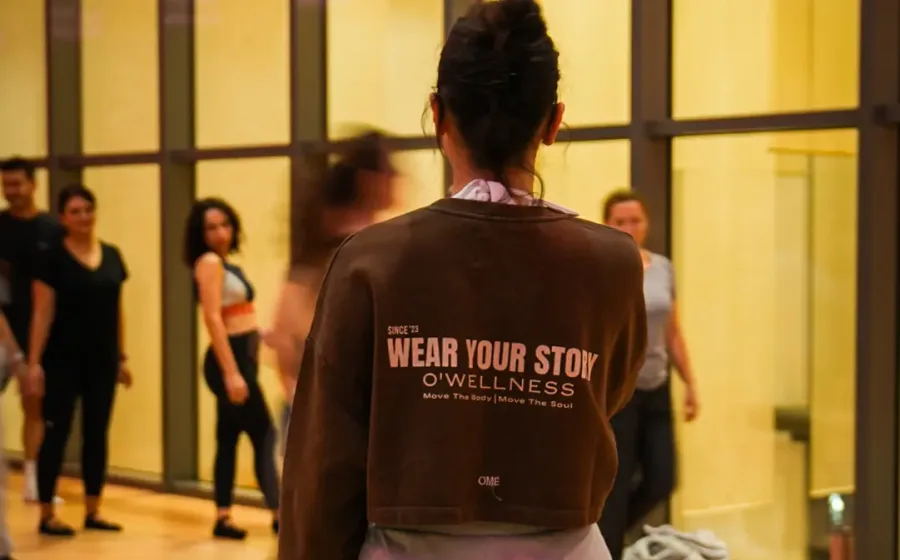
What is barre Pilates? Ballet-inspired muscular endurance
What is barre Pilates and which muscles does it work? How it differs from ballet and classical Pilates, a typical class flow, what you gain and suggestions for fitting it into your weekly schedule.
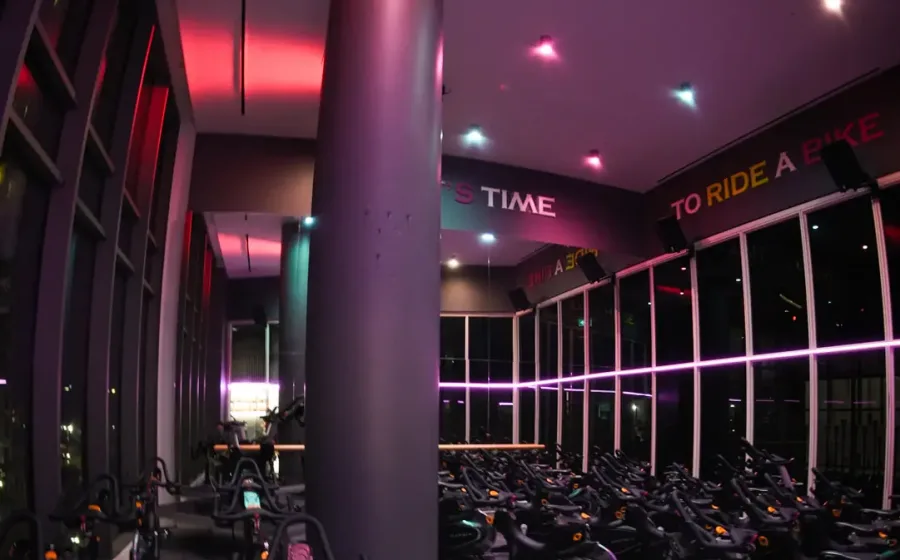
Zumba and dance classes: balancing conditioning and fun
What do Zumba and dance classes offer? Conditioning, coordination and the consistency advantage; fitting them into a weekly schedule and suggestions for your first class.
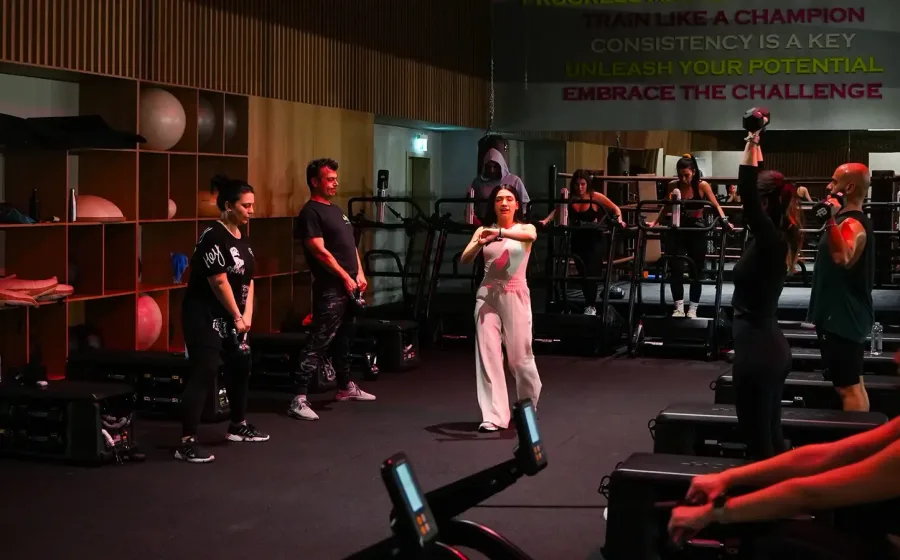
Managing Life Transitions With Group Classes and Yoga: A Steady Rhythm in a Changing Life
How group classes and yoga can provide a steady rhythm through transitions such as moving, parenthood, job changes, and aging.
