
Looking at Your Own Body in Group Class: Getting Out of the Comparison Trap
Comparing yourself with the person next to you in group class affects both motivation and safety. Here are practical ways to turn your attention back to your own body.
Comparison in group class is an experience almost everyone has but few talk about. In a yoga class you fold forward and see the person next to you put their palms on the floor; in a conditioning class you notice someone in the back row keeping going without slowing down. In that moment your attention leaves your own body and shifts to someone else's movement. In this article we look at why comparison comes so naturally, what risks it carries, and ways to bring your attention back to your own body.
Why does comparison come so naturally?
Humans are social learners. When we enter a new environment, we look around to figure out what to do. In group class this tendency is useful: when you don't fully understand the instructor's description, glancing at the person beside you helps you catch the overall shape of the movement. The problem starts the moment looking turns from a learning tool into a measuring tool.
Mirrored studios can strengthen this tendency. A mirror is useful for checking alignment, but it also offers a constant surface for comparison. Seeing your own reflection in the same frame as other reflections can lead you to rank yourself without realizing it.
Behind comparison there is usually missing information. You don't know how many years the person next to you has been practicing, how their body is built, how they slept that night or what sports they did in the past. What you see is only the image of that moment; the story behind it stays invisible.
Differences in body structure are overlooked too. The angle of the hip sockets, the ratio of arm and leg lengths or the elasticity of connective tissue vary from person to person. These differences can mean some poses form easily in one person and not at all in another. In other words, some limits have to do with bone structure rather than effort, and they can't be forced past.
The cost of comparison
The most concrete risk of comparison is going beyond your own limit. Trying to reach the depth of the person next to you, you can lose alignment, hold your breath or strain a joint. Even if the shape of the movement looks similar, the control inside is lost.
A less visible cost is on motivation. Constantly comparing yourself with more experienced people makes it harder to see your own progress. Even if you can now do a movement you couldn't do three months ago, someone beside you being a step ahead can overshadow that gain. Over time this feeling can reduce your desire to go to class.
Comparison isn't limited to physical movement. Clothing, equipment and conversations before or after class can also become grounds for comparison. When such thoughts are carried into class, the attention available for the movement itself shrinks. Trying to leave the rest of the day at the door as you enter the studio is a small but effective ritual in this respect.
There's also comparison in the other direction: feeling relieved when you see yourself as ahead of someone less experienced. Though this feeling may be pleasant in the moment, it still keeps your attention outside and can keep your own practice from deepening.
Ways to turn attention back to your own body
Eliminating comparison entirely isn't a realistic goal. The real aim is to notice when attention slips outward and to bring it back gently. This is a skill, and it can be practiced in every class. The methods below are useful starting points for developing it:
- Nefese dönün: başkasına baktığınızı fark ettiğinizde bir nefesin başını ve sonunu takip edin.
- Bakış noktası seçin: durağan duruşlarda gözlerinizi önünüzde sabit bir noktaya yerleştirin.
- Bir duyuya odaklanın: ayak tabanlarınızın zemine basışı ya da ellerinizin minderdeki yeri gibi.
- Kendinize soru sorun: “Şu an bu hareket bende nerede hissettiriyor?”
- Gözlerinizi kısa süre kapatın: güvenli olan duruşlarda birkaç nefeslik iç dikkat yaratır.
What these methods have in common is that they move attention from the visual world to bodily sensation. The eyes tend to read the outside; sensations such as breath, pressure and warmth keep you inside. Deciding at the start of class which sensation you'll return to gives you a ready exit when the moment of comparison comes.
Setting a small intention for yourself at the start of class also directs attention. A single goal like "today I'll listen to my breath" or "today I'll keep my shoulders relaxed" acts as an anchor you can return to when the moment of comparison comes. That intention isn't about others; it's only about your practice that day.
Where you set up can help too. On days when comparison affects you strongly, choosing a spot that doesn't face the mirror or the crowd directly reduces distraction. But make sure you're somewhere you can see and hear the instructor.
On some days, closing your eyes or lowering your head slightly isn't enough; on those days, accepting the feeling of comparison without judging it is also an option. Noticing it is the first step to letting it go.
Making your own progress visible
The best antidote to comparison is to compare yourself with your own past. Remembering how many breaths you could hold a pose six weeks ago, which movement felt hard, or how you felt after class shows real progress. This information can only be remembered if it's written down somewhere.
Short notes after class are enough for this. A sentence like "my front leg didn't shake in warrior pose" or "my breath didn't speed up in the last section" shows you how far you've come when you look back weeks later. These notes build a dialogue with yourself, not with others.
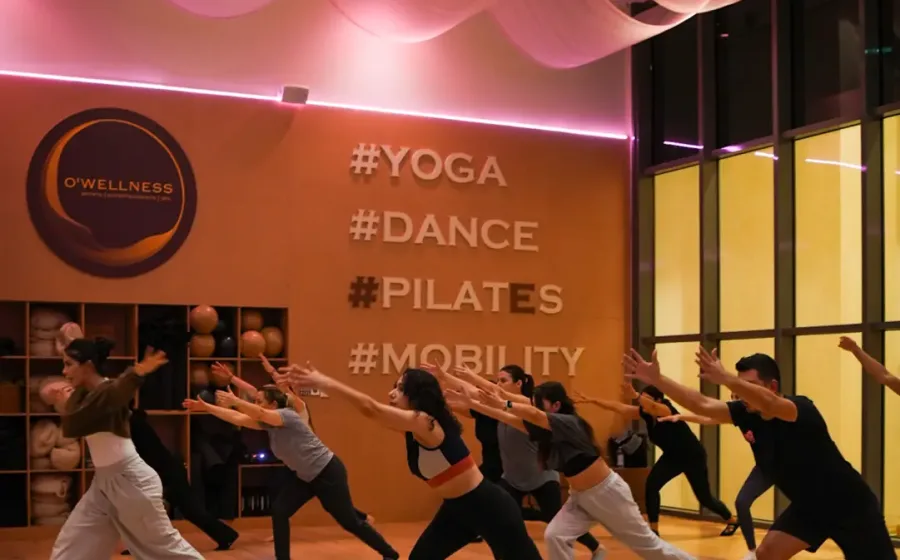
In the group classes at O'Wellness Dragos, it's natural to have people of different levels in the same studio. That's why instructors offer easier and harder options for most movements. Which option you choose is a decision about your body that day; it isn't a sign of success or failure.
Day-to-day variation is also part of your own progress. A pose you did easily one week may feel hard the next. That fluctuation isn't going backward; it's a natural reflection of factors like sleep, stress, nutrition and hormonal cycles. Comparing yourself only with your best day is another form of the comparison trap.
The role of the instructor and the community
The instructor's language strongly affects the climate of comparison in the studio. Instead of "everyone put your hands on the floor," phrases like "stay wherever your hands reach on your legs" make difference normal. Small sentences at the end of class reminding you to thank your own body also keep attention inward.
The community is part of this culture too. People who come to the same class regularly get to know each other's journeys over time, and comparison can give way to curiosity and support. Noticing someone's progress can turn into a way of getting inspired rather than feeling left behind.
If comparison pushes you to force a movement and you notice sharp pain, dizziness or an unusual sensation, stop and move into a resting position. If you have a known health condition, consult your doctor before starting a new class and share your situation with the instructor.
In the end, the value of group class lies not in everyone doing the same thing but in everyone being able to do their own practice in the same space. Looking at the person beside you is sometimes unavoidable; what matters is remembering, each time, to come back to your own breath and your own body.
Frequently Asked Questions
As a beginner, should I stand in the back row?
Not necessarily. Choosing a spot where you can clearly see and hear the instructor matters more. The middle rows often offer a good balance.
Does choosing the easier option slow down progress?
No. An easy option done with control usually contributes more than an advanced one done with strain, and it keeps progress safe.
What if the feeling of comparison never goes away?
The feeling may never vanish entirely; what matters is noticing it and bringing your attention back. Over time that return becomes faster and easier.
Related Posts

Joining a group class for the first time: getting past front-row nerves
Why does first group class anxiety happen and how do you get past it? Which class to start with, and practical steps if you are wary of the front row.
What is mobility? A weekly routine for joint health
What is mobility training and how does it differ from flexibility? The four priority areas, a 15-minute routine four days a week and practical tests for measuring progress.

Can you do yoga and Pilates together? A weekly combination
The differences between yoga and Pilates, why they complement each other, and three combination templates for 2-4 days a week.
