
Joining a group class for the first time: getting past front-row nerves
Why does first group class anxiety happen and how do you get past it? Which class to start with, and practical steps if you are wary of the front row.
Joining a group class for the first time, leaves almost everyone new to exercise with the same question marks: I don’t know the moves, will everyone be looking at me, what if I fall behind, maybe I should stand at the back? These hesitations are so common that they are practically routine for instructors. And here is the good news: nearly all of them resolve on their own within the first three or four classes.
Many people stepping into a new studio around Cevizli and Maltepe are actually postponing not exercise but the idea of “being watched.” When we talk with people who have just joined our group classes at O’Wellness Dragos, the sentence we hear most often is exactly that: “I wish I had come sooner, there was nothing to be afraid of after all.” In this article we have gathered the practical approaches that make crossing that threshold easier.
Where does front-row hesitation come from?
There is a tendency in psychology called the “spotlight effect”: people assume they are being watched far more closely than those around them actually are. In a group class this effect peaks. You are standing in front of a mirror, with music, doing moves you do not know, and you imagine everyone is evaluating you.
The reality is this: the other participants are almost entirely occupied with their own movements, their own breathing and their own fatigue. They too were once in their first class. Watch a class from the outside and you will notice it right away; nobody is following anybody.
But what if someone really does look?
It happens; glancing at someone is natural. But what lies behind the glance is usually not what you assume. When experienced participants see a new face, the first thought for most is “good for them, they came.” In fitness communities, the attitude toward a newcomer is far more supportive than expected.
Seven practical steps that make the first class easier
- Arrive early. Being at the studio 10 minutes early lets you see the room while it is still empty and choose your spot. Walking into a crowd at the last minute multiplies the stress.
- Introduce yourself to the instructor. “It’s my first class today” is a single sentence, but it makes a big difference. The instructor will offer a pace and variations that suit you.
- Try the middle rows. The back row is not as comfortable as you think; it is harder to see the instructor. The middle row is balanced for both visibility and comfort.
- Come with a friend. Having a familiar face beside you in the first class noticeably reduces the hesitation.
- Wear what you feel comfortable in. Showing up in a new, untested outfit can leave you fussing with your clothes all through the class.
- Make your goal smaller. Let the goal of the first class be not good performance but simply finishing the class and getting to know the format.
- Normalize taking a break. Stopping for water or to catch your breath is something everyone does. It is not a sign of failure.
Which class is easier to start with?
Not all group classes have the same entry threshold. For a beginner, classes with a more predictable pace where the movements are explained one by one are usually more comfortable.
Comfortable options to start with
- Reformer Pilates: You work on your own equipment, the number of movements is limited and controlled, and the instructor adjusts each participant individually.
- Mat pilates and flexibility classes: The pace is slow and breath-focused; the coordination pressure is low.
- Beginner-level functional classes: Because they run on a station format, working at your own pace is easy.
What to try once you have settled in
- High-tempo HIIT and circuit formats
- Dance and step-based classes with choreography
- Kettlebell classes that require learning technique
This is not a rule, of course; some people feel more at ease in a high-tempo class. But if coordination worries you, starting with a format where the movements are few and repeated is usually less overwhelming.
The “I don’t know the moves” worry
A group class is not an exam designed for people who already know the moves; it is a structure designed to teach them. The instructor demonstrates every exercise, names the easier and harder variations, and moves around the room correcting as the class goes on.
Not getting a movement quite right in your first classes is completely expected. The mechanism at work is this: when the body learns a new movement it first imitates it roughly, and then, with repetition, the nervous system refines the pattern. So the first class may feel like it went “badly,” but the learning has already begun there.
Fitness anxiety: is falling behind a problem?
No. In a group class there is no goal of everyone finishing the same repetition at the same moment. In time-based classes the clock is shared; the workload is personal. You may be doing 10 reps while the person next to you does 18, and that is simply a sign of different starting points.
After three or four weeks you will see a clear difference compared with your own first week. Your point of comparison should not be the fittest person in the room but the version of you from a month ago. Almost everyone on the Anatolian Side who has built a regular exercise habit crossed this same threshold in the same way.
Being out of breath
Breathing faster during exercise is an expected response. However, if you feel dizziness, tightness in the chest, nausea or unusual fatigue, stop the class, rest and tell the instructor. If you have a known health condition or have been inactive for a long time, it is best to consult your physician before starting a program.
What happens after the first class?
You will probably feel mild muscle soreness within 24-48 hours. This is called delayed onset muscle soreness, and it is a normal adaptive response to a new stimulus. A light walk, a warm shower and enough water usually help. After a few workouts this soreness decreases noticeably.
Plenty of people postpone the second class, and that is the easiest way to lose the rhythm. If you can, take your second class within 3-4 days of the first. Once you have completed three classes, the feeling of “being new” largely disappears.
Five questions beginners ask most often
Is my clothing suitable enough?
An outfit that does not restrict your movement and will not feel uncomfortable once you sweat is enough. Branded activewear is not required. Socks may be required in pilates classes; it is practical to ask about class-specific details like this in advance.
Am I starting too late?
People of every age range join group classes. The age you start affects which class and which intensity suits you; it does not affect whether you start. The instructor adjusts the program accordingly.
Can I leave in the middle of a class?
If you are not feeling well, yes, and you should. Simply letting the instructor know briefly on your way out is enough. Nobody will make an issue of it.
What if I can’t do a movement?
The instructor will give you an easier version of it. Every exercise has several variations; this is part of how the program normally works.
When will I see a difference?
Many people say they notice a change in energy and sleep quality in the first weeks. Clearer differences in conditioning and strength generally show up around six to eight weeks for someone training twice a week. These timelines vary from person to person.
A small framework for staying consistent
- Set two fixed days and times each week; making the decision anew every week only gets harder
- Treat the first month as a “trial month” and do not assess your performance
- Try two different class formats and find out which one you enjoy
- Pack your bag the night before
At O’Wellness Dragos, everyone who joins is given an orientation approach with instructor support in their first classes; which class is the right starting point for you is something we can determine together through conversation. Contact the club for the class schedule and level recommendations.
One last reminder: everyone in the room was in their first class once. Front-row hesitation is a real feeling, but it is not permanent. Once you have walked in, the only thing you will need to think about for your second class is what time you are coming.
Related Posts
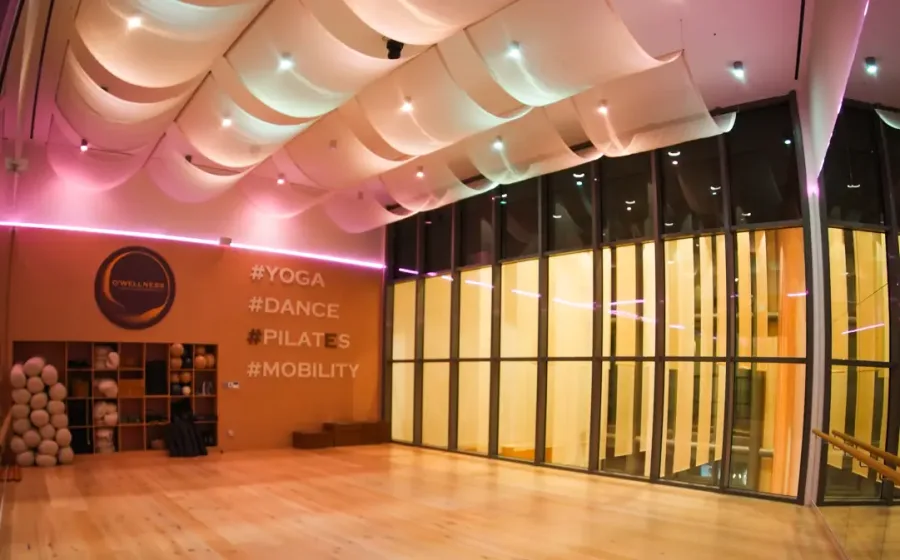
Group class guide: get to know all 20 formats at Dragos’ in one article
What are group classes? All 20 formats at Dragos, one by one: Pilates, yoga, HIIT, cycling and mobility. An intensity table, how to choose by goal and a sample week.

Warm-up before and cool-down after group classes: a 10-minute routine
Instead of rushing in and out, a short preparation and finishing routine improves performance and recovery.
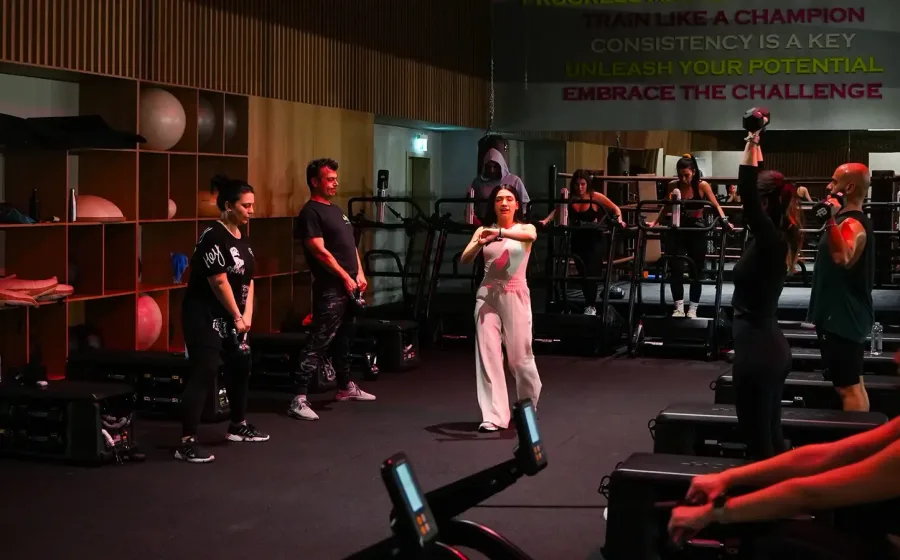
Managing Life Transitions With Group Classes and Yoga: A Steady Rhythm in a Changing Life
How group classes and yoga can provide a steady rhythm through transitions such as moving, parenthood, job changes, and aging.
