
Indoor cycling: conditioning, calories and technique at the O’Ride studio
The benefits of indoor cycling, realistic calorie expectations, correct bike setup and the most common technical mistakes. A practical guide to your first class at the O'Ride studio.
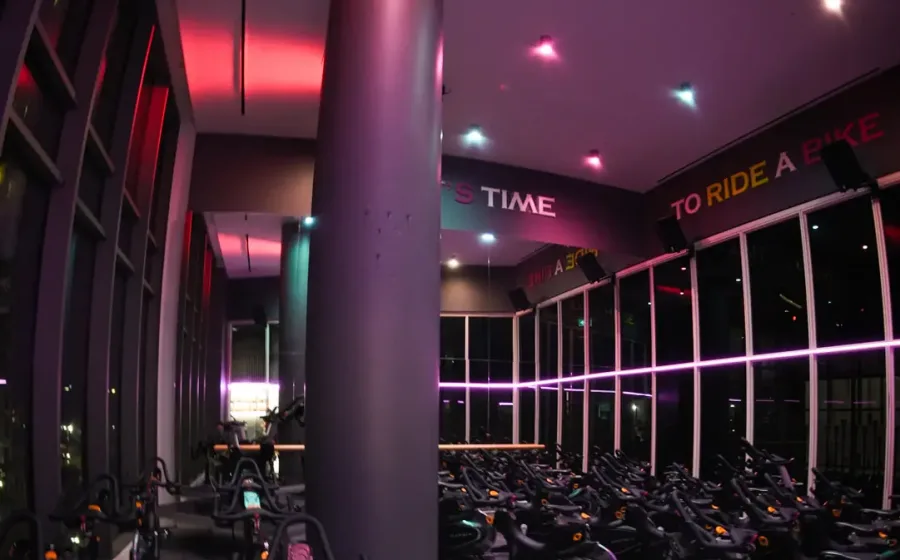
The most discussed of the benefits of indoor cycling is calorie burn, but the reason people who do it regularly keep coming back usually lies elsewhere: the load on the joints is low while the cardiovascular stimulus can be very high. At O’Wellness Dragos, indoor cycling classes take place in the O’Ride studio; some of the members coming from around Maltepe and Dragos prefer this studio because running bothers their knees, and others because they love the group energy synchronized to the music. In this article we look at what indoor cycling does in the body, correct bike setup, the realistic limits of calorie expectations, technical mistakes and how it fits into a weekly schedule.
What is indoor cycling, and is it different from spinning?
Indoor cycling is a group conditioning class performed on a stationary bike, under instructor guidance and usually matched to the rhythm of music. The term “spinning” is in fact the registered name of a particular brand; it is used synonymously in everyday speech, but the correct general name is indoor cycling.
The structure of the class typically proceeds as follows: a 5-8 minute warm-up, then a 30-40 minute main block built around changes in resistance and cadence, and finally a 5 minute cool-down and stretch. In the main block, the instructor manages three key variables:
- Resistance: The load that resists the flywheel turning. Set with the screw or dial on the bike, it creates the feeling of climbing on flat ground.
- Cadence: Pedal revolutions per minute. Low cadence plus high resistance is strength-oriented; high cadence plus low resistance is cardiovascular.
- Position: Working seated, standing, or in a short sprint position.
The combination of these three variables makes it possible to produce very different classes in the same 45 minutes. That is why the O’Ride program includes tempo-focused, interval-focused and climb-focused classes separately. For current times weekly schedule you can see from the page.
The main gains indoor cycling supports
Regular indoor cycling practice helps with development in the areas below. These are not medical claims but the general benefits associated with regular aerobic exercise.
- Cardiovascular endurance: It has a positive effect on the heart's stroke volume and on the efficiency of oxygen transport. In practice you notice this as being less out of breath when climbing stairs.
- Low joint load: Because the foot stays in contact with the pedal, there is none of the repetitive impact load of running. It is a more accessible way to build fitness for anyone with sensitive knees or ankles.
- Leg muscular endurance: The quadriceps, gluteus maximus, hamstrings and calf muscles work at high repetition counts.
- Calorie expenditure: Depending on intensity and the individual, a 45-minute class produces a significant energy expenditure.
- Mental focus and mood: Group work synchronized to music makes it easier to keep training motivation going.
- Usability as a recovery tool: A 20-30 minute ride at low resistance and low cadence works well as active recovery after strength training.
Realistic calorie expectations
Figures circulating online such as “800 calories in 45 minutes” are mostly far too optimistic. The energy expended varies with body weight, training level, class intensity and the power the person produces. The table below offers a rough reference range; precise measurement requires a power-meter bike or a heart-rate-based estimate.
| Class type | Duration | Average heart rate band | Approximate expenditure range |
|---|---|---|---|
| Tempo / endurance | 45 min | Max. 65-75% | 350-500 kcal |
| Interval | 45 min | Max. 70-85% | 400-600 kcal |
| Climb focused | 45 min | Max. 70-80% | 380-550 kcal |
| Active recovery | 25 min | Max. 55-65% | 120-200 kcal |
The important point here is this: chasing the calorie figure usually produces a bad strategy. People who try to do every class at maximum intensity accumulate fatigue within 4-6 weeks and lose consistency. One or two high-intensity classes a week, keeping the rest at moderate intensity, produces more total expenditure in the long run.
Bike setup: the two most important minutes of the class
In indoor cycling, the greater part of the injury risk comes from an incorrect bike setup. At O'Ride the instructors do the setup with you in the first class, but knowing your own measurements lets you be ready in 30 seconds in every class.
| Setting | Reference | Sign of a mistake |
|---|---|---|
| Saddle height | Standing, the saddle should be level with your hip bone | Too low: pain at the front of the knee. Too high: rocking hips, inner-thigh chafing |
| Saddle fore-aft | With the pedal level, the knee sits over the pedal spindle | Too far forward: pressure at the front of the knee. Too far back: excess hamstring tension |
| Handlebar height | For a beginner, level with the saddle or slightly above | Too low: lower back and neck fatigue |
| Foot position | The wide part of the sole sits over the pedal spindle | Pedalling on your toes: calf cramps and numbness |
| Strap tension | Tight enough that your foot doesn't slip, loose enough not to restrict circulation | Too tight: numbness when standing |
Once the setup is done, check that the knee never locks out completely as you pedal and that a slight bend remains at the lowest point. If the knee straightens fully, the saddle is too high.
The five most common technique mistakes
Technique faults are possible even on a properly set-up bike. The five points below are the ones corrected most often in class.
- Pedalling fast with no resistance: It causes the hips to bounce on the saddle and uncontrolled movement at the knee joint. As cadence rises, at least a minimum resistance should be kept.
- Leaning your weight on the handlebars: If the upper body rests its weight on the handlebars, the shoulders and wrists tire and the legs never take the real load. The torso should support itself with its own muscles.
- Pulling the shoulders to the ears: Especially common when climbing out of the saddle. Setting the shoulder blades down and back reduces tension in the neck.
- Only pushing down: An efficient pedal stroke is circular: push, glide, pull, pass through. Pushing in one direction only overworks the quadriceps.
- Holding your breath: Holding your breath during hard efforts is a common reflex, and it pushes your heart rate up unnecessarily. Rhythmic breathing should be maintained throughout the class.
Asking your trainer for feedback is the fastest route to fixing technique. The areas of expertise of our studio team our trainers page; for those who prefer one-to-one work special services there are one-to-one session options included.
Practical preparation for your first class
Most people coming to indoor cycling for the first time complain about two things: saddle discomfort and tiring sooner than expected. Both are predictable and both have solutions.
- Arrive early. Be in the studio 10 minutes before class starts and don't rush your set-up.
- Wear padded shorts or tights. Saddle soreness in the first 2-3 classes is normal and usually eases within 3-4 classes.
- Keep water and a towel with you. Even with air flow in the room, you will sweat noticeably; walking into class with 400-500 ml of water is a good start.
- Don't try to match the trainer move for move in your first class. Keep your own resistance at a level where you can still talk but have to keep your sentences short.
- Do not hesitate to pick the back rows. The sightlines are good and it makes it easier to find your own rhythm.
- After class, set aside 5 minutes to stretch the calves, quadriceps and hip flexors.
Where indoor cycling fits in your weekly schedule
Indoor cycling is a powerful fitness tool but does not on its own make a balanced program, because the upper body and spinal rotation get almost no work. In practice, the best result comes from combining cycling with strength and Pilates work.
| Day | Conditioning goal | Strength and control goal |
|---|---|---|
| Monday | Indoor cycling (tempo) | – |
| Tuesday | – | Strength: lower body |
| Wednesday | – | Reformer or mat Pilates |
| Thursday | Indoor cycling (interval) | – |
| Friday | – | Strength: upper body |
| Saturday | An easy ride or a walk | Yin yoga / mobility |
| Sunday | Rest | Pool, sauna |
This template can be run in a single facility thanks to the four studios at O’Wellness Dragos. To improve core control, reformer Pilates to see its classes and the class variety group classes you can look at the page. After an intense cycling week, the heated indoor pool, sauna and steam room support recovery; those looking for more comprehensive care can turn to our separately operating brand O’Spa Dragos can look at the options.
Who should take extra care?
Although indoor cycling is low impact, it can be high intensity. In the case of uncontrolled blood pressure, known heart disease, serious knee or hip pathology, pregnancy, or a return from a long period of inactivity, you need to get your physician's opinion before starting the program. Even after obtaining physician approval, keeping the intensity low in the first 2-3 weeks and increasing class length gradually is the right approach. If dizziness, chest pressure, pain radiating down the arm or unusual shortness of breath occurs during class, the work must be stopped immediately and the instructor informed.
Thanks to easy access from around Dragos, Cevizli, Kartal, Pendik and Kadıköy, it is possible to attend O’Ride classes after work. If you are not sure which class type suits you contact you can request an assessment from the page.
Frequently asked questions
Does indoor cycling make your legs bulky? Because typical group classes work with high repetitions and moderate resistance, a marked increase in muscle volume is not expected; changes are seen more in muscle endurance and in the perception of tone. A marked increase in volume appears if it is targeted with a dedicated program designed around heavy resistance and low repetitions.
How many days a week can I do indoor cycling? For most people, 2-3 classes a week, together with strength and mobility work, creates a balanced load. If you are going to do more, it is important to vary the intensity of the classes, that is, not to do them all at high intensity.
I have knee pain — is indoor cycling suitable for me? Although it is often recommended because of its low impact load, this varies from person to person. If you have a diagnosed knee problem, first get your physician’s opinion; after that, the saddle height and fore-aft position must be set carefully, and excessively high resistance avoided.
Is it compulsory to stand up during class? No. Working standing is an option in the class, not a requirement. If you feel uncomfortable in terms of balance or low back comfort, you can complete the whole class seated and obtain a similar stimulus by increasing the resistance a little.
Related Posts
Zumba and dance classes: balancing conditioning and fun
What do Zumba and dance classes offer? Conditioning, coordination and the consistency advantage; fitting them into a weekly schedule and suggestions for your first class.
Managing Life Transitions With Group Classes and Yoga: A Steady Rhythm in a Changing Life
How group classes and yoga can provide a steady rhythm through transitions such as moving, parenthood, job changes, and aging.

Warm-up before and cool-down after group classes: a 10-minute routine
Instead of rushing in and out, a short preparation and finishing routine improves performance and recovery.
